


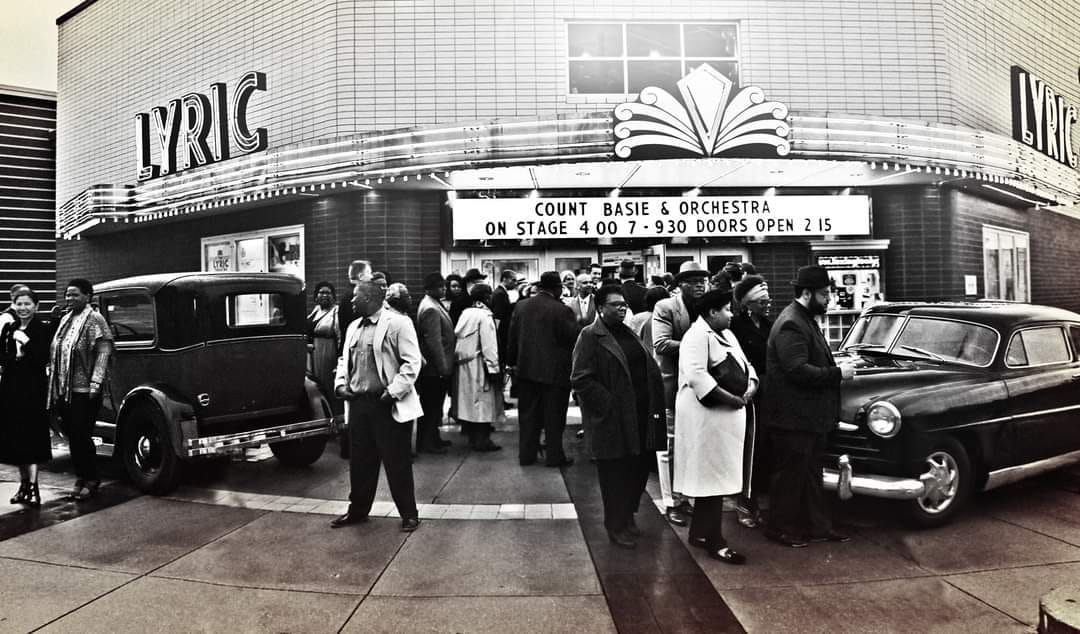
The Lyric Theatre & Cultural Arts Center: A Legacy of Culture and Community
Opened in 1948, the Lyric Theatre quickly emerged as Lexington’s premier Black entertainment venue during the era of segregation. Located in the heart of the historic East End, the Lyric was far more than a movie house—it was a vital cultural anchor and gathering place where Black residents could celebrate art, music, film, and community in a space they could call their own.
As a recognized stop on the legendary Chitlin’ Circuit, the Lyric connected Lexington to a powerful national network of Black performers touring across the South and Midwest. The stage welcomed world-class musicians, comedians, and entertainers, while the theater itself served as a lively social, commercial, and cultural epicenter for Black families, entrepreneurs, and artists. On any given night, the Lyric buzzed with energy—hosting concerts, film screenings, dances, and community events that shaped the social fabric of the East End and beyond.
This period is remembered as the Lyric’s Golden Era of Entertainment, when the theater stood as a symbol of resilience, excellence, and Black creative expression during a time of limited access and opportunity elsewhere in the city.
In 1963, amid widespread urban renewal efforts that dramatically reshaped Lexington’s East End, the Lyric closed its doors. For decades, the building stood silent, reflecting both the loss of a cultural landmark and the broader displacement experienced by many Black neighborhoods during that era.
In 2010, the Lyric was fully renovated and triumphantly reopened, reborn as the Lyric Theatre & Cultural Arts Center. Its restoration marked a powerful homecoming—honoring the past while embracing a new mission rooted in service, creativity, and inclusion. Today, the Lyric once again serves as a dynamic hub for performances, exhibitions, education programs, and community engagement, uplifting voices across generations.
Through arts, education, cultural programming, and historic preservation, the Lyric continues to honor its legacy while shaping the future—standing as a living testament to the enduring power of Black culture, creativity, and community in Lexington and throughout the Commonwealth.